
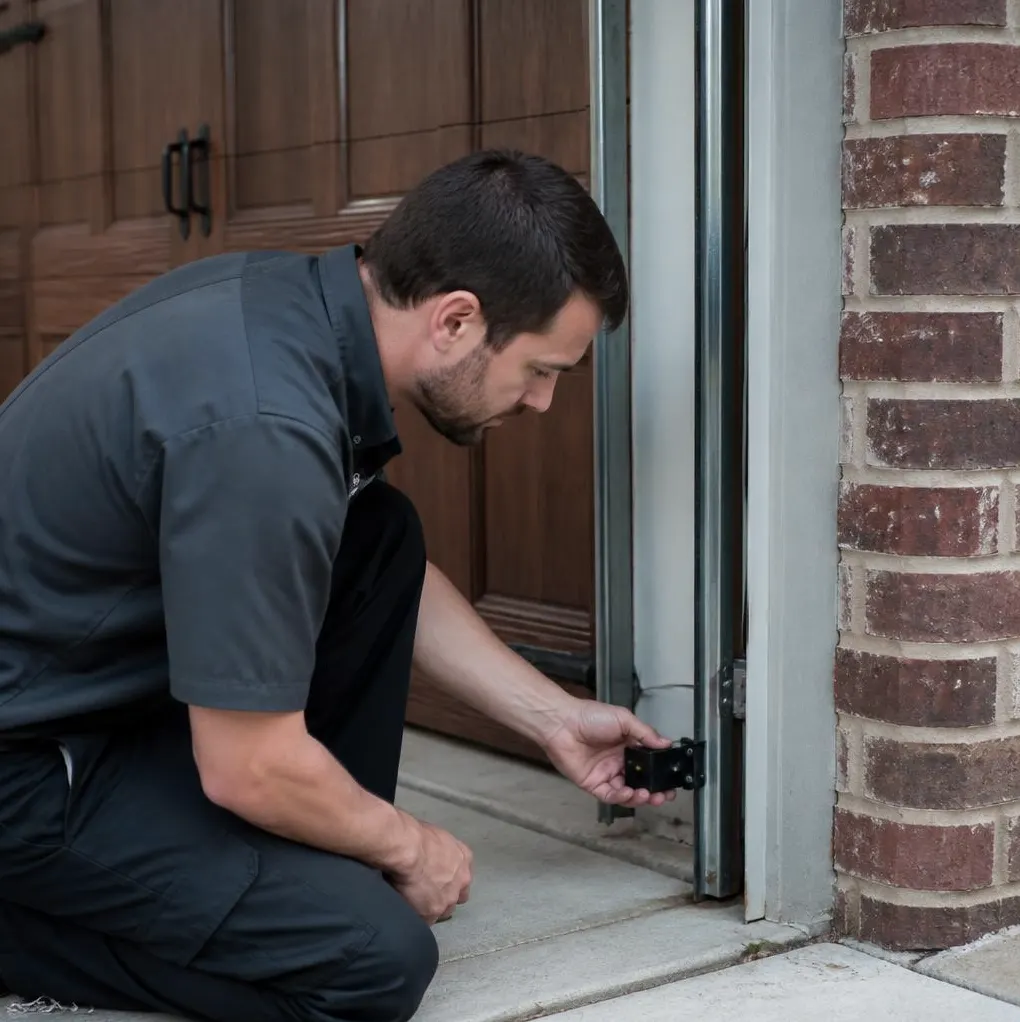
The Mistake Most People Make First
The door won't open, so the first instinct is to mash the remote button again and again, or walk over and yank upward on the bottom panel. It's tempting because it feels like the fastest possible fix, and nine times out of ten with a balky opener, pressing the button twice does solve it. But a door that's frozen or stiffened by cold weather isn't an opener problem at its root, and forcing it can strip the drive gear inside the opener, bend a track, or snap cables that were already under extra strain from the cold. Before you touch the remote a third time, it's worth knowing what's actually happening underneath the door.
What You'll Notice First
- The door doesn't move at all when you hit the opener, but the motor hums or clicks like it's trying
- It lifts an inch or two, then stops, and the opener reverses or shuts off
- You can see a thin sheet of ice or a frosty seam where the rubber seal meets the slab
- The door moves, but slower and noisier than usual, with more grinding than the usual squeak
- The remote works fine from inside the car, but the door seems to strain partway up
Each of these points to a different stage in the problem, and a technician works through them in a specific order because the cheapest, most common cause should always get ruled out first.
Cause 1: Ice Bonding the Seal to the Slab
This is the one to check first, and it's especially common here after a stretch of heavy rain followed by a quick temperature drop, which is a pattern the Triangle sees more than people expect with occasional ice storms rolling through. Water seeps under the bottom weather seal, then freezes solid overnight, gluing the rubber to the concrete. The fix is simple but requires patience: never pry the door with a crowbar. Instead, use a hair dryer, a space heater held at a safe distance, or warm (not boiling) water poured along the seal line to melt the bond, then try the opener again. If this happens repeatedly, the long-term fix is making sure the slab slopes properly away from the door and that the bottom seal isn't cracked or flattened, since a worn seal holds more water against the ground in the first place.
Cause 2: Stiffened Grease on Tracks, Rollers, and Hinges
Once ice is ruled out, the next check is lubrication. Standard grease thickens in cold temperatures, and in a climate that swings between humid summers and occasional freezes, a lot of garage hardware ends up coated in a mix of old grease, pollen residue, and moisture that turns gummy when it's cold. This shows up as a door that moves but groans and hesitates at certain points on the track. The fix is a full relube with a garage-door-rated lithium or silicone spray on the rollers, hinges, and track, not household WD-40, which is a solvent and will actually strip what lubrication is left. This is routine maintenance work and usually resolves sluggish movement on the spot.
Cause 3: Torsion Springs Losing Tension in the Cold
Metal contracts in cold weather, and torsion springs are no exception. A spring that's already near the end of its service life may simply not have enough tension to lift the door once the metal tightens up in freezing temperatures, even though it worked fine the week before. Symptoms here include the door opening partway and stalling, or the opener motor straining audibly on every attempt. This isn't a DIY adjustment. Torsion springs are under enormous tension and resetting or replacing them requires the right tools and experience.
Cause 4: Opener Force Settings and Travel Limits
If the door is heavier to move because of stiff rollers or a cold spring, the opener's force and limit settings, which were calibrated for normal conditions, may now read that added resistance as an obstruction and stop or reverse the door. A technician will check and recalibrate these settings as part of ruling out a hardware problem versus a settings problem.
Cause 5: Rust or Corrosion on Tracks and Rollers
Garages shaded by pine trees or sitting in consistently moist spots collect more condensation on metal track surfaces, and that moisture plus cold can accelerate surface rust, especially on older steel rollers. Rust creates friction the opener has to fight, which looks a lot like a cold-weather problem but is really a maintenance issue that's been building for a while.
When to Call Chapel Hill Garage Door Pro
If warming the seal and relubing the hardware doesn't fix it, or if you hear the opener straining and suspect the springs, that's the point to call in a technician rather than keep testing it yourself. We handle Garage Door Repair for exactly these cold-weather calls, and if it turns out to be a spring issue, our Spring Replacement service gets it done safely with the right tension for your door's weight. A seasonal Garage Door Maintenance visit before the next cold snap can also catch stiff rollers and worn seals before they turn into a Saturday morning you spend standing in the driveway with a hair dryer.
If your garage door is sticking, straining, or frozen shut this week, give Chapel Hill Garage Door Pro a call. We serve Chapel Hill, NC and the surrounding Triangle area, and we can usually get a technician out the same day.